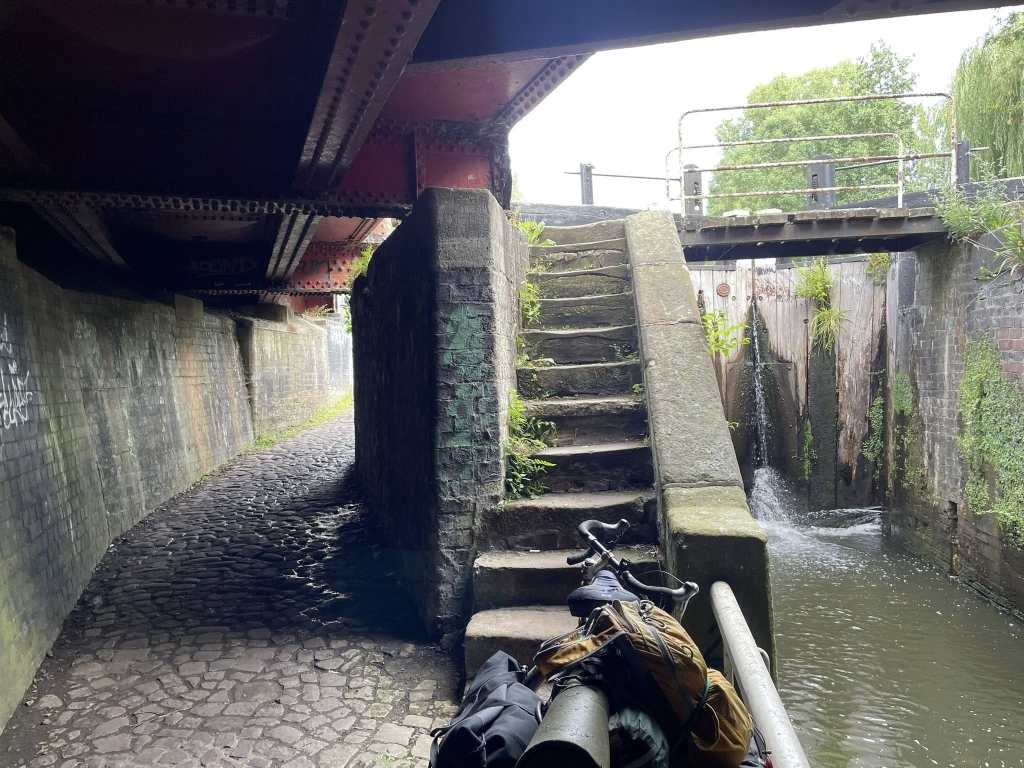
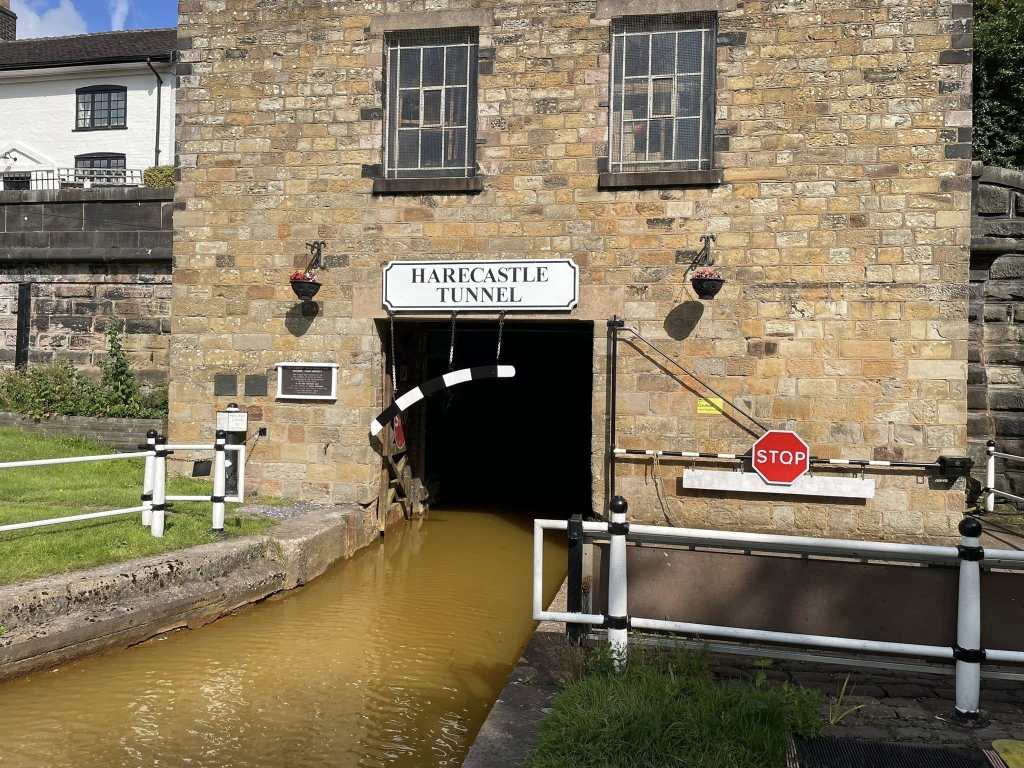
From being canal-shy, now we can’t get enough. The Midlands are canal heaven, so of course there won’t be a day goes by that we don’t touch a towpath. The Trent and Mersey leads north from industrial Stoke, punctuated with the chimneys and kilns of the old potteries. The well-paved towpath descends into vicious cobbles at each lock, through Middleport and Longport all the way to the Harecastle tunnel. We stop at the entrance. It’s 1.5 miles long and the far end is just about visible, a distant moon of light. A feat of canal engineering that is as impressive now as it was 200 years ago when it was built.
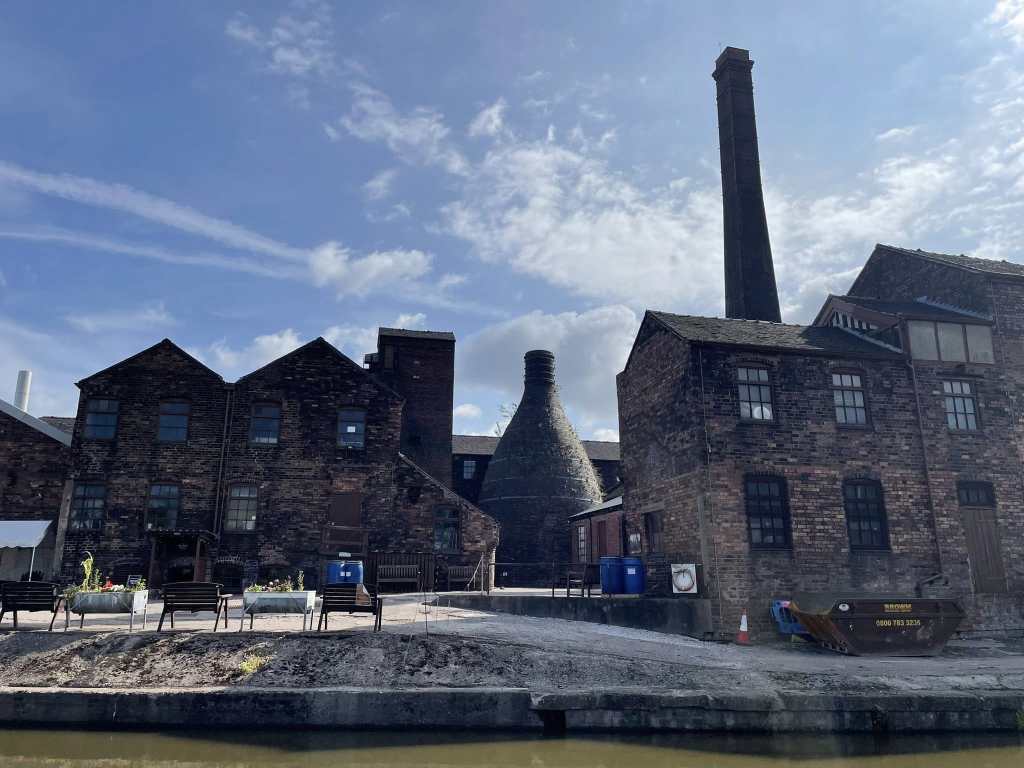
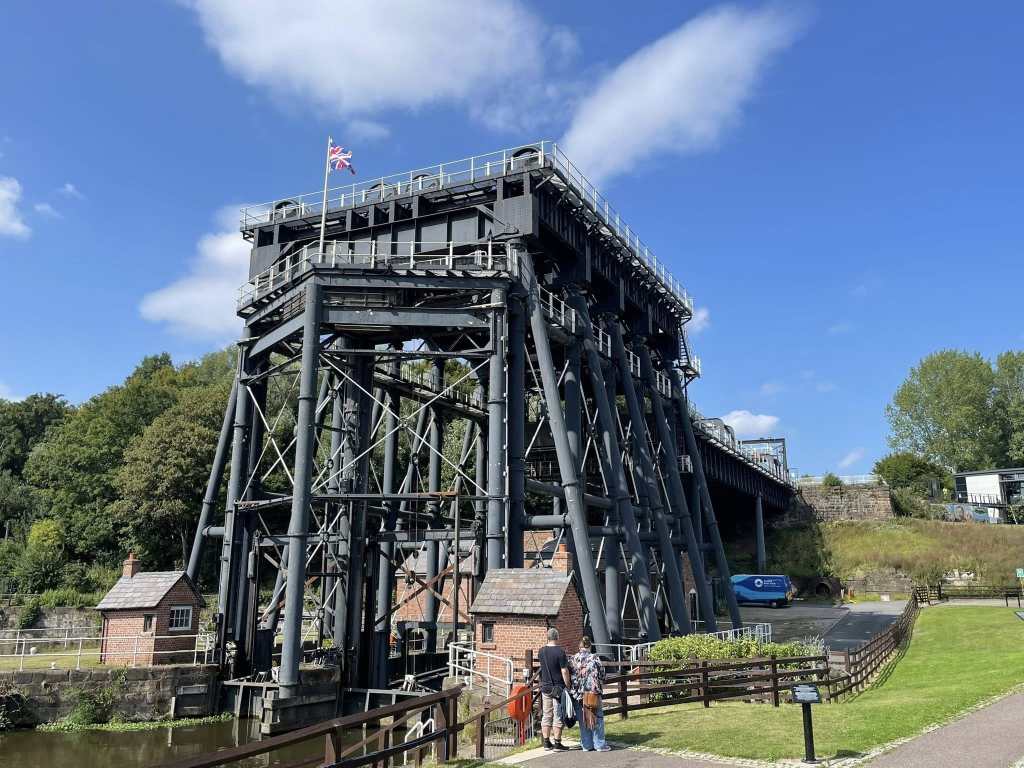
We must be in Cheshire because when we leave the canal we’re in Sandbach, soon followed by Middlewich and Northwich. Delightful Sanbach is our tea and cake stop where we say goodbye to Howard, Middlewich is where we say goodbye to Katy, and Northwich is were we find our next piece of canal infrastructure, the Anderton boat lift. As a boater, it’s something I have always been aware of but never actually knew where it was. So when I spot it close to our proposed route, I convince the others we should head there for lunch.
The lunch is not worth mentioning (the cups of soup were half full so we sent them back for a proper portion), but the boat lift is a marvel: a unique and clever way of transporting boats from the high level canal to the River Weaver below. It was built in the 1870s, in the golden era of the inland waterways when canals were dug with remarkable speed and a huge amount of the UK’s industry was transported by boat. It replaced the salt chutes that transferred the main trading goods from the canal to the river, a costly and inefficient method. Moving the boats themselves was much more effective, so the boat lift was built. It’s a testament to the Victorian engineers that it’s still standing today.
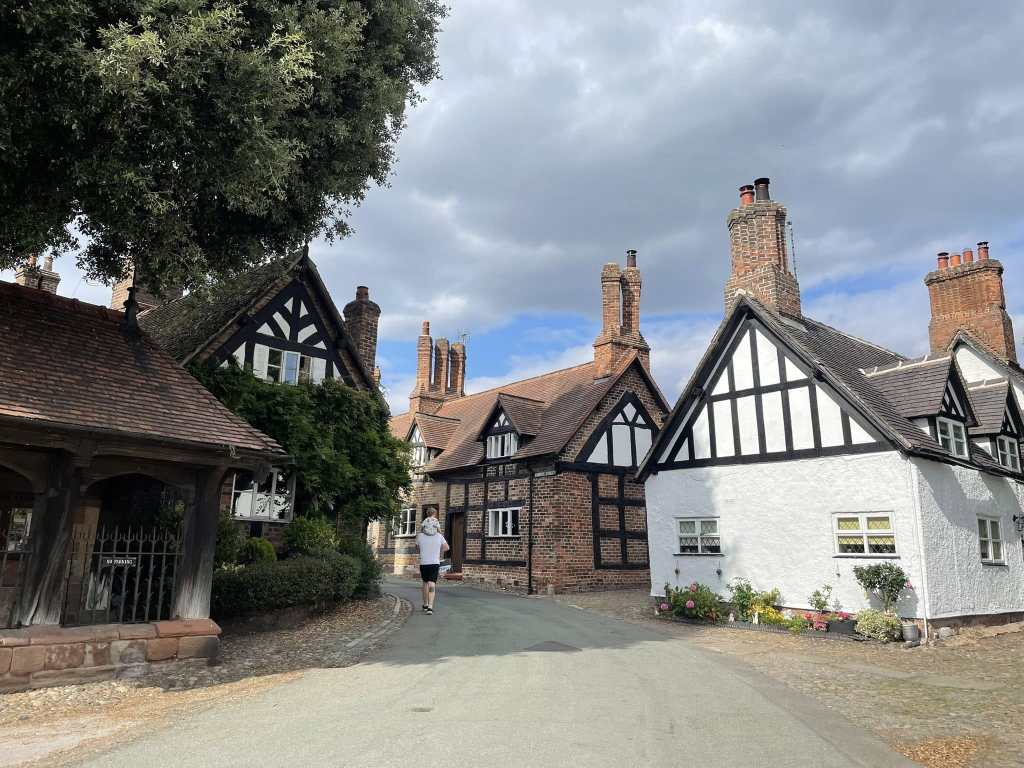
There’s one more piece of canal infrastructure that we’re keen to see: the Warburton bridge on the Manchester Ship Canal. It’s a slight detour, but detours are what makes a trip like this, especially if it’s through Great Budworth. This is the kind of place you can’t ride more than a few metres without stopping for another photo: narrow streets, intricate brickwork, timber-framed buildings, elegant chimney stacks, historical post offices and old coaching inns. It’s like something straight out of a Jane Austin novel.
Onwards through the country lanes towards Warburton. The toll to cross the bridge was 12p until recently, when it was hiked to £1, much to the outrage of local residents. On the approach we pass a set of cast iron railings, the kind of thing that is clearly hundreds of years old. “That’s old,” says Mark, as we ride past, oblivious.
It turns out THIS is the actual toll bridge, which crossed the original course of the river Mersey before it was re-cut to accommodate the huge ships that used the Manchester Ship Canal. This is where the toll booth was, but it’s now been removed in anticipation of automatic tolling. So now the historic railings rust above a dried-up ditch, and warrant only the briefest of mentions from passing cyclists.
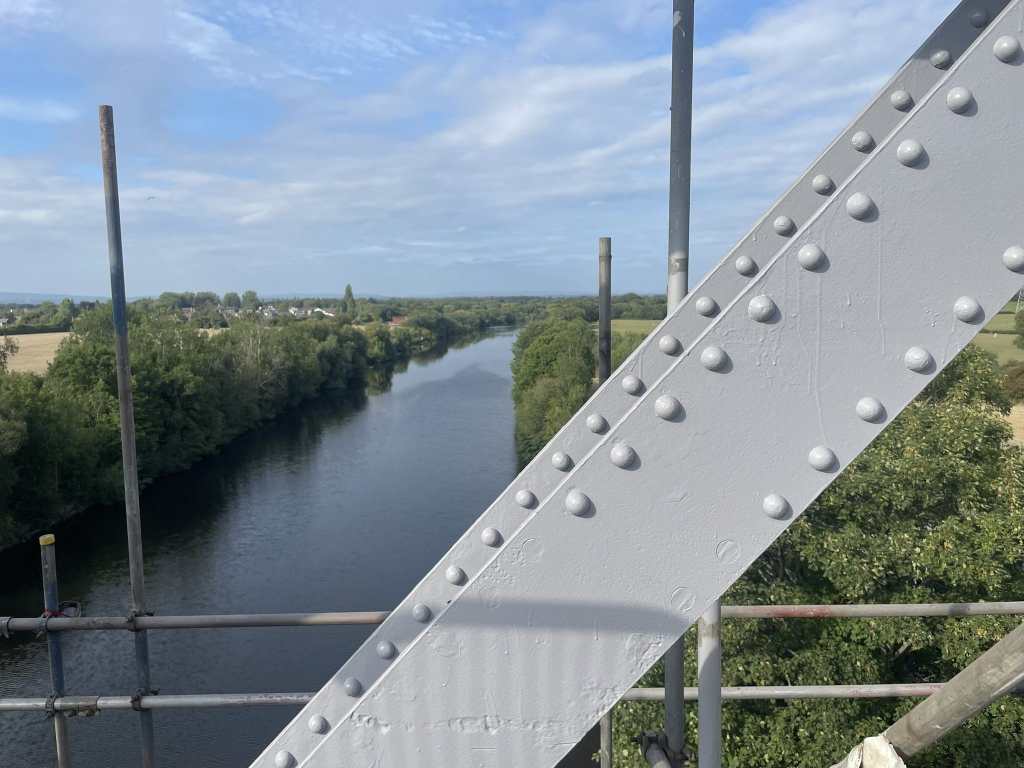
We were promised a lot from the bridge, but the approach reveals it’s covered in scaffolding. A bridge built in the 1890s will surely need working on from time to time. It’s actually a good thing that it’s covered in scaffolding, because the road works means there’s only one direction of traffic, and a makeshift walkway has been set on both sides for the workers, meaning that we can park our bikes and walk along the bridge to take as many pictures as we like, high above the water.
We’re camping near a road again, and this time there’s a railway to add to the equation. But nine days in, all of us are sleeping well in our tents. It must be a combination of getting used to it, and the sheer exhaustion of riding a bike all day long.
Stats for the day: 90km riding, 440m climbing
Accommodation: Laylands farm campsite. The proprietor, Ian, didn’t charge for our stay.
 Ride for Tim
Leave a comment