The midges are out. I can see them through the mesh in my inner tent, crawling over the fabric, waiting for their breakfast. The outer tent is thick with little black bodies, similarly waiting. I know I need to be smart – as soon as I open the zip, that’s it. I pack up everything inside the tent: sleeping bag, mattress, pillow, roll mat and backpack, ready to slot into my panniers. My flipflops are just outside the tent next to my clothes bag. I take a deep breath, unzip the tent, grab the bags and run.
It takes about 10 seconds to reach the door of the Crask Inn but that’s enough for the midges: they’re all over my head, buzzing in my ears, some even in my eyes. I look back. There are huge clouds hovering above each tent, just waiting for the human inside to emerge. We have no chance.
Each day usually begins with a departure photo, a nice posed shot of us lined up with our bikes somewhere, but there’s no way we’ll be doing that today. It’s every man for himself. There’s an almost comedy level of yowls and manic dancing while we strike the tents, trying not to get completely devoured. Then it’s onto the bikes and away, out-flying the wee beasties.
I’ve a few bites on my legs but nothing noticeable really. Mark has quite a lot of red blotches around his eyes and face, but they’ve disappeared by that evening. Lorenzo has suffered the most, no doubt about it. His legs and arms are covered in hundreds of bites, which still bear the angry red marks days later.
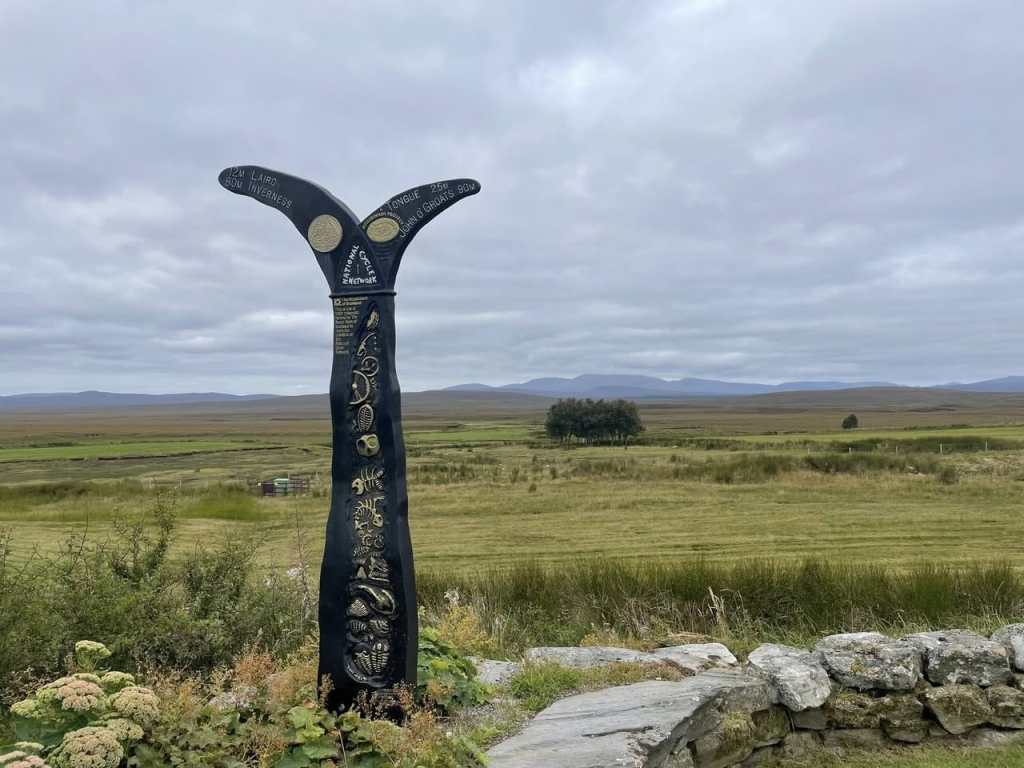
The A road is quiet this morning, and once we’ve passed Altnaharra we make the turning for the Strathnaver road. If the A road felt minor, this B road feels even more so. It’s narrow and winding with regular passing places, and rises and falls next to the loch. It’s a long and slow but delightful journey, and the road flattens out once we reach the river, which we follow for several miles as it makes its steady descent to the sea.
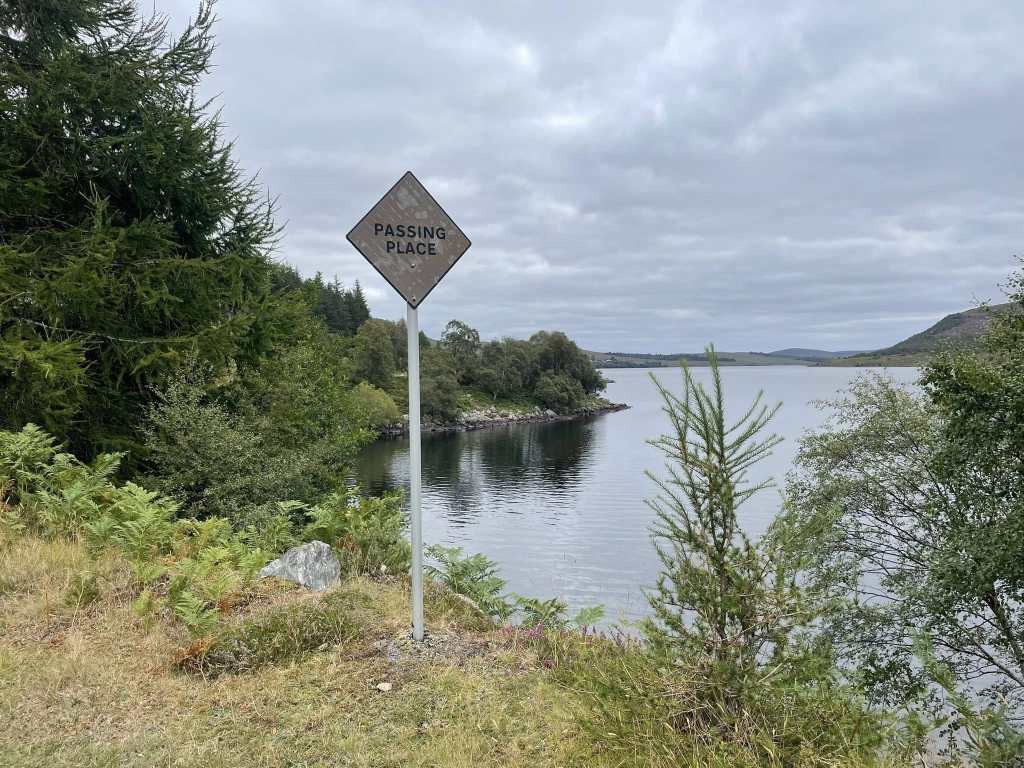
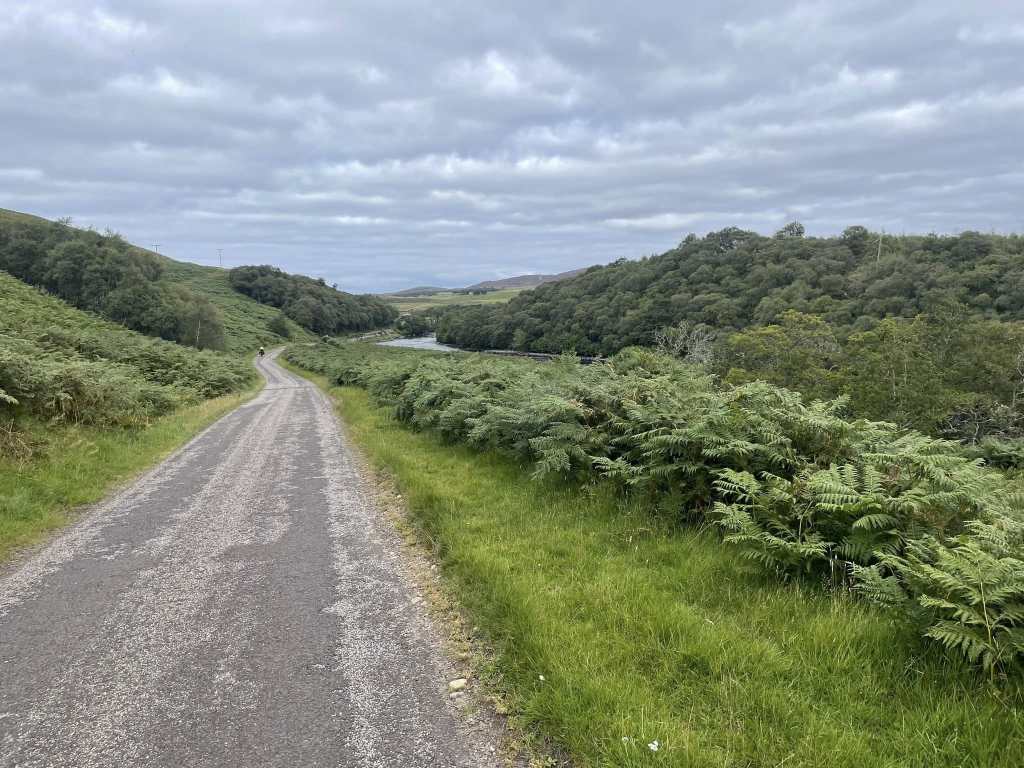
Just south of Bettyhill we turn onto the A836: this is the route of the North Coast 500 tourist route, the NC500. It’s been a ‘thing’ since 2015, and was developed by the local tourist board to encourage visitors to the area. There are mixed views: on the one hand it has boosted the local economy and brought people to a stunning piece of the UK coastline, but on the other, it has encouraged lots of traffic onto infrastructure that isn’t designed to handle so much. In the few short hours between turning onto the road and reaching our campsite I count 33 camper vans. This seems a huge amount, given that the first time I ever cycled along this road, I would have seen no more than a handful per day. But compare that to the Lake District, which is nose-to-tail traffic on all the main routes, I suppose this isn’t so bad.
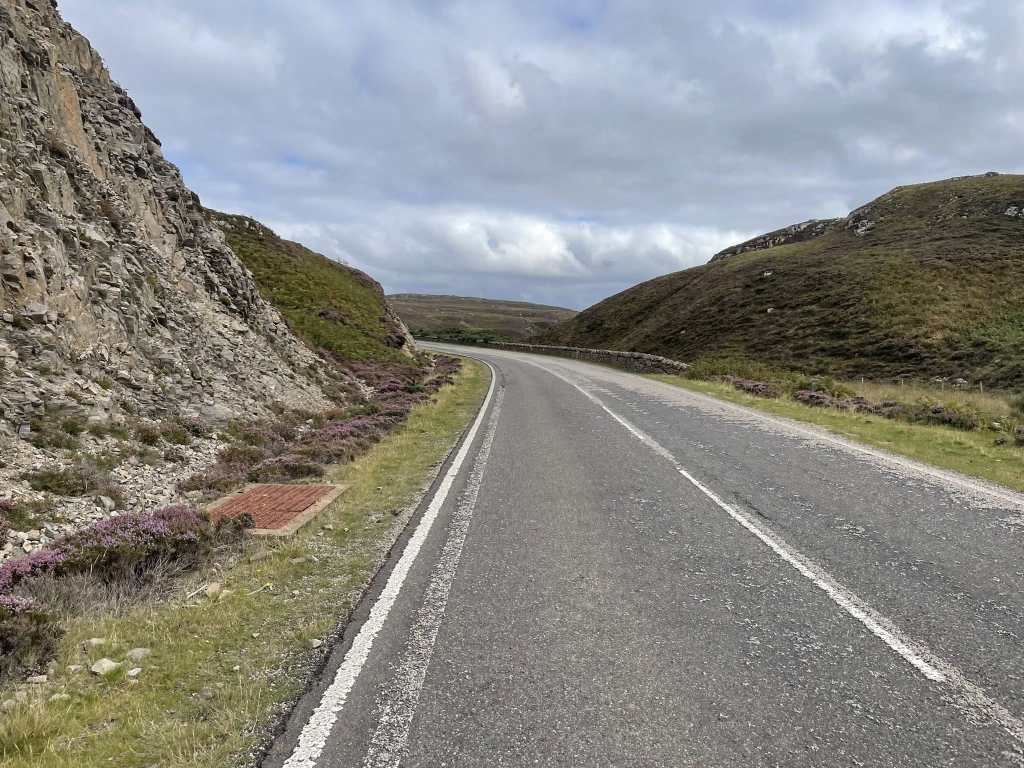
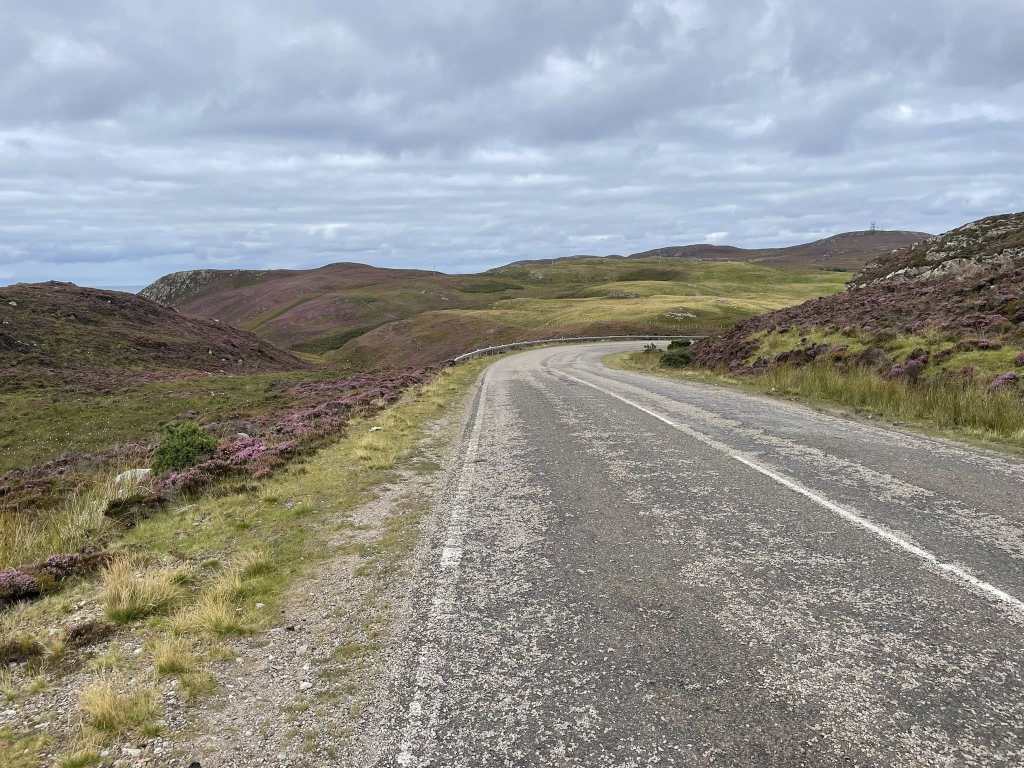
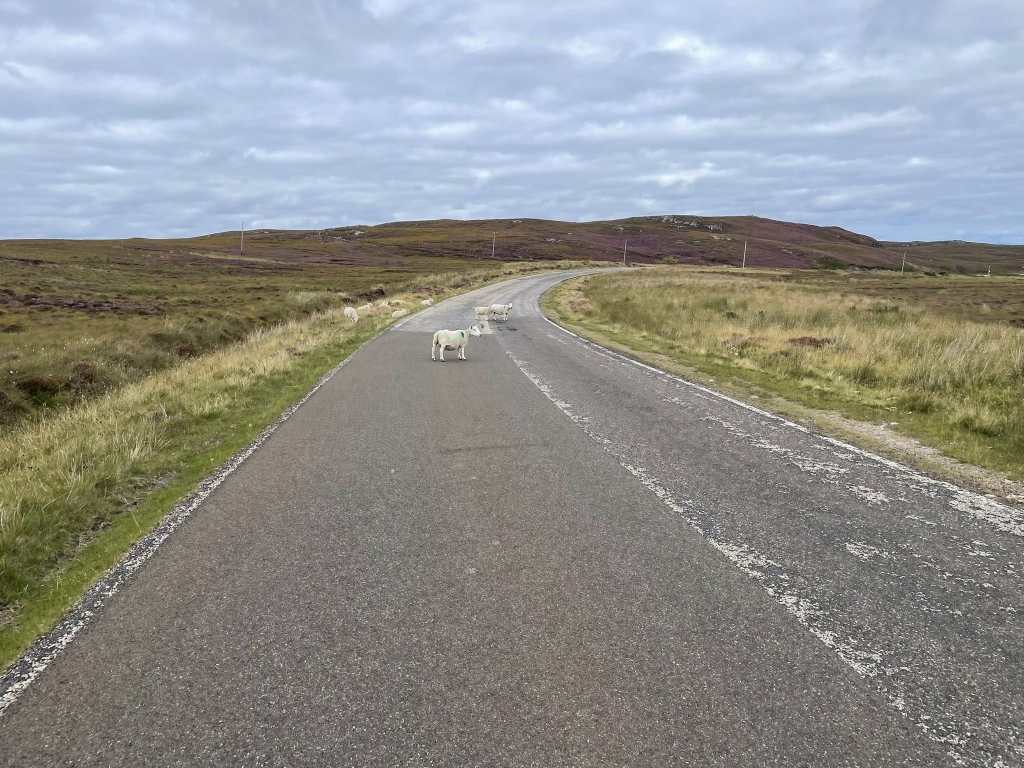
And who am I to begrudge people coming here? The road is absolutely spectacular. Bays with golden sands and rolling breakers. A winding road where each new turn brings yet another ‘wow’. Mountains blue on the horizon. Hills that rise then plunge to cross rivers then climb again. The Atlantic ocean, shimmering in the sunshine. And it’s not so busy: even with tourism encouraged, there are still more sheep than cars.
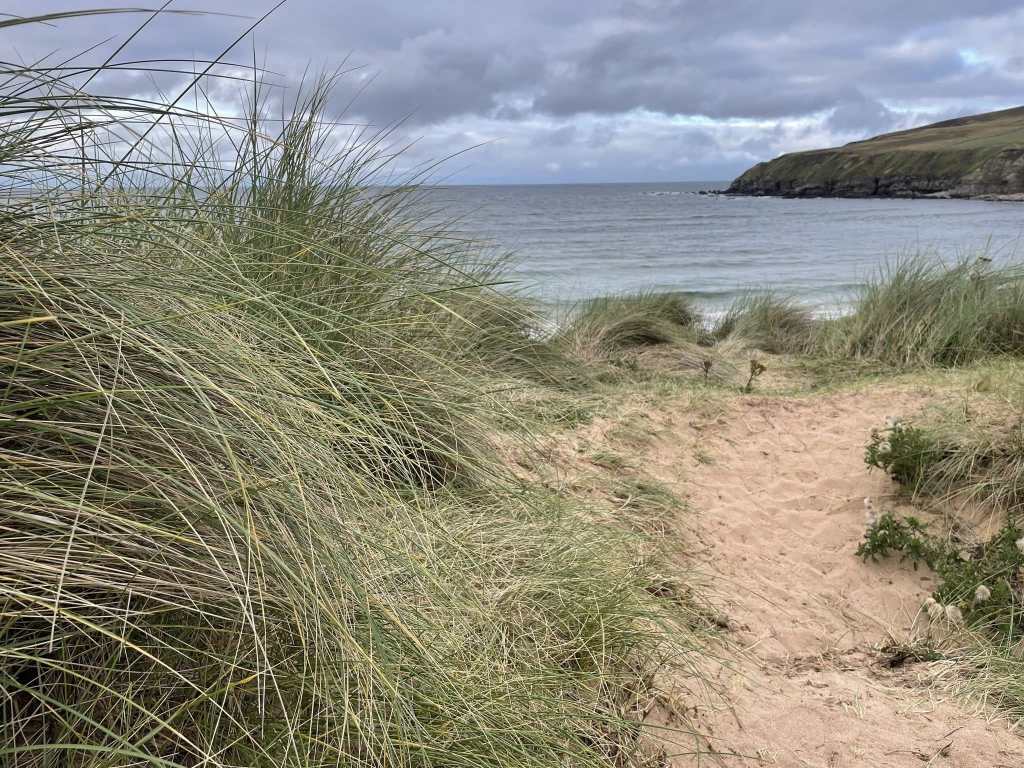
We book into a campsite next to one of those amazing beaches: Melvich, where the dunes are piled high and the breakers crash on to the sand. Even at the height of summer there’s last-minute space for us all, and we all agree this is our best camp spot yet.
Stats for the day: 74km riding, 747m climbing
Accommodation: North Coast Touring Park at the Halladale Inn. Small but enough space for us all, with an excellent toilet/shower block, laundry, and right next to the pub for evening drinks and meal. We loved it!

 Ride for Tim
Leave a reply to Carol Cancel reply